

PABLO PICASSO (After)
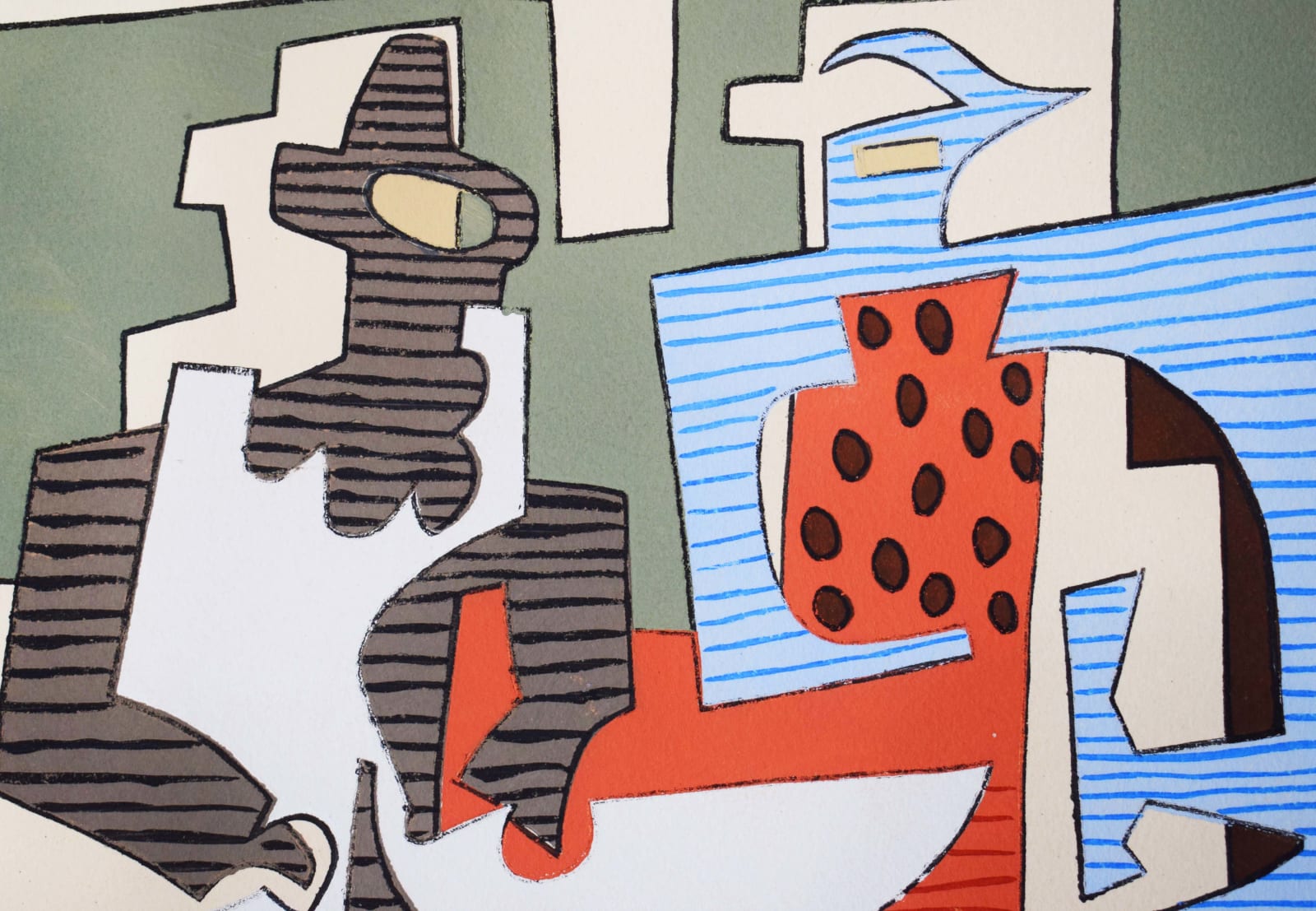
Pierrot and Harlequin, from: Ten Pochoirs | Pierrot et arlequin: Dix pochoir, ca. 1920
Hand Signed and Numbered Pochoir in Colours on J. Perrigot Arches Wove Paper
Paper size: 24.8 x 30 cm. / 9.8 x 11.8 in.
Image size: 21 x 27 cm. / 8.3 x 10.6 in.
Image size: 21 x 27 cm. / 8.3 x 10.6 in.
This pochoir by Pablo Picasso is hand signed by the artist in pencil "Picasso" at the lower left margin.
It is hand numbered in pencil from the edition of 100, at the lower left margin.
It is part of the very rare series "Dix Pochoirs" of ten works by Pablo Picasso.
This pochoir was based on a painting of the same period.
The portfolio was published by Editions Galerie Rosenberg, Paris around 1920, in a limited edition of 100 signed and numbered impressions.
The complete portfolio can be found in the collection of the Museum of Modern Art, New York.
Note: Paul Rosenberg opened his gallery at No. 21 Rue La Boitie in 1911. Seven years later, Picasso moved into an apartment on the same street with his first wife, Olga Khokhlova, and the two men initiated a long personal and professional relationship. In 1919, Rosenberg opened an exhibition of Picasso's drawings and watercolours related to the artist's designs for Sergei Diaghilev's production of the ballet Le Tricorne. Dix Pochoirs was published around the same time, and they bear a strong resemblance to some of Picasso's set and costume designs for Parade, another ballet composed for Diaghilev's Ballet Russes in 1917. Picasso and many of his contemporaries such as Henri Matisse built a rich tradition of designing for the Ballet Russes, blending their distinctive visual styles with the company's ground-breaking choreography and music composed by the likes of Eric Satie and Igor Stravinsky.
Also of note is the figure of the Harlequin, a comedic character traditionally dressed in checkered clothing that became a personal symbol for the artist throughout his Blue and Rose periods, to be replaced in later works by the mythological figure of the minotaur. Pierrot and Harlequin is thus a classic example of Picasso's early work as an artist, and also represents the unparalleled scope of his vision and creativity in bringing his artistry to bear on the worlds of music and dance.
Provenance: The collection of David Max Draime (1933-2006) and Cecile Draime.
Condition: Very good condition. Pale time-staining in the margins. Minor moisture staining in the lower left sheet corner.
It is hand numbered in pencil from the edition of 100, at the lower left margin.
It is part of the very rare series "Dix Pochoirs" of ten works by Pablo Picasso.
This pochoir was based on a painting of the same period.
The portfolio was published by Editions Galerie Rosenberg, Paris around 1920, in a limited edition of 100 signed and numbered impressions.
The complete portfolio can be found in the collection of the Museum of Modern Art, New York.
Note: Paul Rosenberg opened his gallery at No. 21 Rue La Boitie in 1911. Seven years later, Picasso moved into an apartment on the same street with his first wife, Olga Khokhlova, and the two men initiated a long personal and professional relationship. In 1919, Rosenberg opened an exhibition of Picasso's drawings and watercolours related to the artist's designs for Sergei Diaghilev's production of the ballet Le Tricorne. Dix Pochoirs was published around the same time, and they bear a strong resemblance to some of Picasso's set and costume designs for Parade, another ballet composed for Diaghilev's Ballet Russes in 1917. Picasso and many of his contemporaries such as Henri Matisse built a rich tradition of designing for the Ballet Russes, blending their distinctive visual styles with the company's ground-breaking choreography and music composed by the likes of Eric Satie and Igor Stravinsky.
Also of note is the figure of the Harlequin, a comedic character traditionally dressed in checkered clothing that became a personal symbol for the artist throughout his Blue and Rose periods, to be replaced in later works by the mythological figure of the minotaur. Pierrot and Harlequin is thus a classic example of Picasso's early work as an artist, and also represents the unparalleled scope of his vision and creativity in bringing his artistry to bear on the worlds of music and dance.
Provenance: The collection of David Max Draime (1933-2006) and Cecile Draime.
Condition: Very good condition. Pale time-staining in the margins. Minor moisture staining in the lower left sheet corner.
$ 16,500.00 Unframed
Further images


Printed Edition
1stDibs
1stDibs
Printed Edition
1stDibs
1stDibs
1
of
3